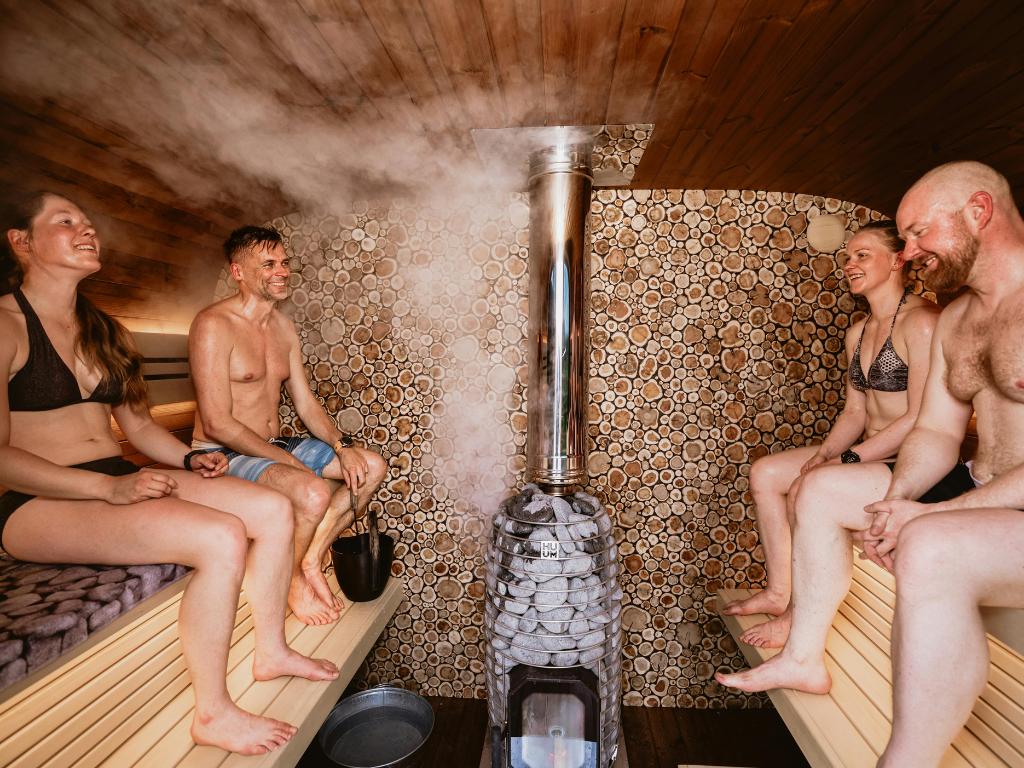
The phrase infrared sauna detox sells sessions, but it misrepresents what sweating does. Sweat is roughly 99 percent water, and your liver and kidneys, not your skin, handle the real work of clearing waste. This blog walks you through what a session genuinely does for your body and what it does not, separating the science from the marketing behind theLife Energy Sauna at our Ubi centre.
Does an infrared sauna detox your body?
No, an infrared sauna does not detox your body in the way the marketing implies. Sweating is a cooling mechanism, not a waste-clearance system, and the trace toxins that leave in sweat are negligible next to what your liver and kidneys process every minute.We are stating this plainly because the honest answer builds more trust than the popular one. If you are asking does infrared sauna detox the body, the scientific answer is a clear no, and the Life Energy Sauna is no exception. What a session does deliver is real and worth having: better circulation, a cardiovascular workout, and deep relaxation. None of that requires the detox myth to justify it. A clinic that sells you sweat as a cleanse is selling a story, and we would rather sell you the actual physiology.
What is sweat actually made of?
Sweat is approximately 99 percent water, with the remaining 1 percent made up of electrolytes like sodium and chloride, plus trace urea and minerals. Your eccrine glands produce it across your skin to cool you through evaporation, not to filter your blood.This composition is the whole reason the detox claim collapses. A fluid that is 99 percent water is a poor vehicle for carrying out the fat-soluble compounds and heavy metals that detox marketing targets. The small amount of urea in sweat is a genuine metabolic waste product, but your kidneys remove vastly more of it through urine. Sweat electrolyte concentrations are not even a reliable marker of hydration status, which tells you how limited sweat is as a diagnostic or a clearance route. Your sweat glands actively reabsorb sodium before the fluid reaches your skin, which is why sweat is hypotonic and why the body treats salt as something to conserve rather than dump. The infrared sauna and toxins narrative leans on that 1 percent and ignores the 99.
What does sweating actually do, and what does it not clear?
Sweating is thermoregulation, and it regulates your body temperature, full stop. When your core warms, your brain signals millions of eccrine glands to release fluid that cools you as it evaporates. That is the function it evolved for, and it does it well.What sweating does not do is selectively pull toxins from your bloodstream. According to a 2019 review of sweat gland physiology, the role of sweating in eliminating waste is“minor compared with other avenues of excretion via the kidneys” and gastrointestinal tract. The same review notes that eccrine glands do not adapt to ramp up toxin excretion, which kills the idea that sweating harder clears more. Where this breaks down for the wellness industry is simple: the body already has dedicated organs for this, and the skin is not one of them.
What actually detoxifies your body?
Your liver and kidneys do the real detoxification, continuously and without any sauna involved. The liver chemically transforms toxins into compounds the body can excrete, and the kidneys filter blood and send waste out through urine. The gut and lungs handle the rest.This is not alternative opinion. The National Center for Complementary and Integrative Health states that the body’s organs handle detoxification and thatpopular detox products lack proven benefits. McGill University chemist Joe Schwarcz puts the wellness framing bluntly, saying that with detox claims in popular media, “you’re usually looking at silliness.” Supporting these organs is a matter of hydration, diet, and sleep, which is why ourfunctional nutrition work focuses on what you eat rather than how much you sweat. The liver processes far more than any sweat session could approach.
Can you really sweat out heavy metals?
You cannot meaningfully sweat out heavy metals, despite the studies detox marketers cite. Trace amounts of lead, arsenic, and mercury have been detected in sweat, but the quantities are insignificant next to what the kidneys and liver clear, and the detection itself is often a methodological artifact.Heavy metals and many environmental pollutants are fat-soluble, so they store in tissue or circulate in blood rather than dissolving into 99-percent-water sweat. Relying on a sauna to remove them is not a strategy, it is wishful thinking. Anyone with a genuine heavy-metal concern needs medical testing and clinical chelation under a doctor, not a sauna booking. We say this directly because the alternative, letting someone believe sweat is treating a real toxic exposure, is the kind of overreach that does harm. Honest scope protects you, and the infrared sauna and toxins claim fails that test.
What does an infrared sauna actually do, if not detox?
An infrared sauna improves circulation, conditions your cardiovascular system, and shifts you into a parasympathetic, recovery-oriented state. Far-infrared in the 4 to 14 micrometer range warms tissue directly, widening blood vessels and raising heart rate to a level that resembles light exercise.These are the real infrared sauna sweating benefits, and they are well supported. A 2025 review in Frontiers in Cardiovascular Medicine described the body’s response to sauna heat as resembling“moderate to vigorous aerobic exercise”. The post-session rest phase settles your nervous system and supports recovery. The Life Energy Sauna is built and tuned for that circulatory response, which is the benefit we actually stand behind. You can read more about what sessions genuinely deliver in the context of circulation and relaxation. A session built on a 12 to 18 minute exposure earns its place on cardiovascular grounds, not detox ones, and that is a stronger foundation anyway.
Can sweating in a sauna help you lose weight?
Sweating sheds water weight, not fat, and that water returns the moment you rehydrate. Stepping off the scale lighter after a session reflects fluid loss of a few hundred millilitres, which is meaningless for body composition and gone by your next glass of water.The relevant benefit is indirect. The cardiovascular load of a session, the same vasodilation and raised heart rate behind itsenergy therapy value, supports a healthy metabolism over time when paired with movement and diet. A sauna is not a weight-loss device, and any provider implying otherwise is misreading the physiology. Worth noting: chasing scale drops through dehydration is counterproductive, since it stresses the very organs that keep you well.
Does sweating more mean you need to worry about hydration?
Yes, heavy sweating means you need to rehydrate deliberately, because a session can cost you several hundred millilitres of fluid plus electrolytes. Dehydration stresses your kidneys, which are the organs actually doing your detoxification, so over-sweating to “cleanse” works against the goal.Drink water before and after, and replace electrolytes if you sweat heavily or train alongside your sessions. Singapore’s humidity means you often arrive already fluid-depleted, which raises the stakes. We build a 20 to 30 minute rest phase into every Life Energy Sauna session partly so the body can stabilise before you leave. Treating hydration as optional is the most common mistake we see, and it turns a beneficial session into a draining one.
Why does the detox myth matter in Singapore?
The detox myth matters more here because Singapore’s climate already has you sweating most of the day, which exposes the flaw in the logic. If sweating cleared toxins, the tropical heat would handle it for free, and no sauna would be needed for that purpose.People in Singapore lose fluid constantly to the humidity, so the framing of sweat as a scarce, cleansing resource makes little sense. A far-infrared session is worth booking for circulation, cardiovascular conditioning, and a parasympathetic reset, the things it actually does. We position the Life Energy Sauna on those merits because the science supports them and because our founder Tay Swee How, who spent 19 years as an engineer before founding GI Life Sciences in 2003, has no patience for claims a spec sheet cannot back. Honest framing is the point.
Conclusion
An infrared sauna is a genuine tool for circulation, cardiovascular conditioning, and recovery, and a poor one for detox. Sweat is 99 percent water, your liver and kidneys do the real clearance, and sweating harder does not change that. The session is worth your time on its actual merits, not on a myth, and a provider willing to tell you so is one worth trusting with the rest of your health.If you want a session framed by what the science supports rather than what sounds impressive,book a session with our team and ask Mr Tay what it does and does not do.
Frequently Asked Questions
Is infrared sauna sweat different or better than normal sweat?
No. Sweat produced in an infrared sauna is the same roughly 99 percent water and electrolyte fluid as exercise sweat, with no special toxin-clearing property. The Life Energy Sauna’s far-infrared heat changes how comfortably you reach that sweat at a lower ambient temperature, not what the sweat contains.
How much water do you lose in an infrared sauna session?
A typical 12 to 18 minute far-infrared session costs several hundred millilitres of fluid, depending on your size and the heat. That loss is water and electrolytes, not toxins or fat, and it returns once you rehydrate. Mr Tay advises drinking water before and after every session at GI Life Sciences.
Is an infrared sauna good for your skin?
It can support skin indirectly through improved circulation, but not by “purging” it. Better blood flow delivers oxygen and nutrients to the skin, and the post-session glow comes from that circulation rather than detoxification. Far-infrared at 4 to 14 micrometers warms tissue without the harsh surface heat of a traditional sauna.
Do I need detox supplements after sweating in a sauna?
No. You need water and electrolytes, not detox supplements, which the NCCIH notes lack proven benefit. Your liver and kidneys handle clearance without assistance. At GI Life Sciences, our functional nutrition guidance focuses on a sound everyday diet rather than corrective products marketed around a sweat session.