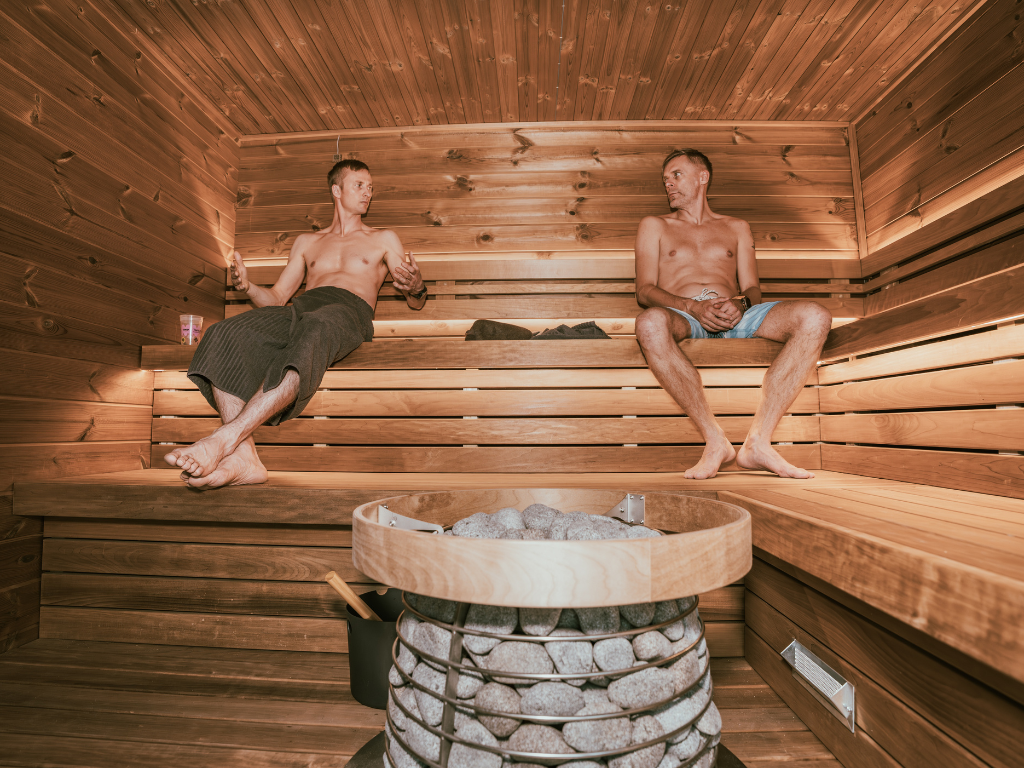
An infrared sauna for circulation works on a simple principle: heat opens blood vessels and moves blood to where it pools least. A 2025 study found far-infrared significantly improved endothelial function in healthy adults. This blog walks you through how the heat supports blood flow, who it helps, and when poor circulation needs a doctor, drawing on theLife Energy Sauna sessions we run at our Ubi centre.
Does an infrared sauna help with circulation?
Yes, an infrared sauna improves circulation by warming tissue and triggering vasodilation, the widening of blood vessels that lets more blood reach your skin and extremities. The effect is immediate during a session and builds with regular use as the vessel lining becomes more responsive.This is the sauna’s best-evidenced benefit, and we lead with it for that reason. Far-infrared in the 4 to 14 micrometer range penetrates 2 to 3 centimetres into tissue, warming you from within rather than just heating the air. That depth raises blood flow where surface warmth cannot reach. An infrared sauna for circulation earns its place on physiology, not wishful thinking, which is more than can be said for the detox and weight-loss claims that crowd this space. The circulatory response is real, measurable, and the foundation of most other benefits a session offers.
How does far-infrared heat improve blood flow?
Far-infrared heat improves blood flow by raising tissue temperature, which signals blood vessels to dilate and boosts the production of nitric oxide, the molecule that keeps vessel walls relaxed. More nitric oxide means wider vessels and easier flow.The chain is well mapped. Heat increases shear stress on the vessel lining, which upregulates endothelial nitric oxide synthase and lifts nitric oxide output, relaxing the vessels and accelerating peripheral blood flow. A far-infrared therapy review describes the rays penetrating 2 to 3 centimetres into subcutaneous tissue without overheating the skin, then accelerating blood flow and promoting capillary dilation. The result is more blood reaching the small vessels in your hands, feet, and skin. This is the same nitric-oxide pathway behind the cardiovascular gains of exercise, which is why a passive sauna session can echo some of what a walk delivers.
Can an infrared sauna help poor circulation and cold hands and feet?
An infrared sauna for poor circulation directly targets the problem by driving warm blood into the extremities that feel it least. Cold hands and feet are usually a sign that peripheral blood flow is sluggish, and heat-induced vasodilation is a direct counter.Using an infrared sauna for cold hands and feet works because the far-infrared warms the body’s core and periphery together, widening the small vessels that supply fingers and toes. People who run cold often notice warmer extremities that persist after a session, as the improved flow lingers. The benefit for infrared sauna blood circulation is most noticeable in those whose circulation is suppressed by lifestyle rather than disease. Worth noting: persistent cold extremities can also point to an underlying condition, so the sauna is a support, not a diagnosis. For lifestyle-driven sluggish circulation, though, regular sessions make a felt difference.
What causes poor circulation, especially in Singapore?
Poor circulation is most often driven by prolonged sitting and constant air-conditioning, both of which suppress blood flow to the extremities. Singapore’s office culture combines the two for much of the day, which is why cold hands and feet are common even in a tropical climate.Sitting still for hours reduces the muscle contractions that help pump blood back from your legs, and prolonged sitting measurably impairs the function of leg arteries. Air-conditioning adds vasoconstriction, since cool ambient temperatures signal peripheral vessels to narrow and conserve heat. The Ministry of Health’s 2024 survey found thatroughly one in three residents live with raised blood pressure or cholesterol, both of which strain the vascular system further. A sedentary, air-conditioned workday is a recipe for sluggish peripheral circulation, and a short heat session is one practical counter among several.
What does the research show on infrared sauna for circulation?
The research on infrared sauna for circulation is consistent: far-infrared heat improves endothelial function and blood flow. A 2025 study of 50 healthy adults found that far-infrared radiation led to“a significant enhancement in endothelial function and a reduction in arterial stiffness”, alongside the upregulation of nitric-oxide and protective genes.The broader cardiovascular picture supports it. A 2025 review in Frontiers in Cardiovascular Medicine described the body’s response to sauna heat as resembling“moderate to vigorous aerobic exercise”, with vasodilation and improved arterial flexibility at its core. Far-infrared therapy has also been shown to raise blood flow in the small vessels of the extremities. The honest caveat is that much circulation research uses clinical or healthy-volunteer settings rather than people with specific complaints, so we frame the sauna as circulatory support backed by sound mechanism, not a cure for a vascular diagnosis.
How is far-infrared different from a hot bath or exercise?
Far-infrared heats you more deeply than a hot bath and more passively than exercise, which makes it useful when movement is hard. A hot bath warms the skin surface, while far-infrared penetrates 2 to 3 centimetres to raise core and tissue temperature directly.Exercise remains the gold standard for circulation, since it combines vasodilation with muscle-pump action that a sauna cannot replicate. We say that plainly rather than overselling the chamber. Where the Life Energy Sauna earns its place is for people who cannot exercise enough, whether through injury, joint pain, or a packed schedule, because it delivers part of the vasodilation benefit without the mechanical load. The reading you can take fromthe wider benefits of sessions is that heat complements movement rather than replacing it. For a sedentary worker, a session plus a daily walk beats either alone.
How long and how often should you use an infrared sauna for circulation?
Two to three sessions a week of 12 to 18 minutes each, with a 20 to 30 minute rest phase, is a sensible cadence for circulation. The vasodilation happens within a single session, while the lasting improvement in vessel responsiveness builds over weeks of regular use.Consistency matters more than intensity here. A short, regular session does more for circulation than an occasional long one, because the endothelial adaptations that improve flow respond to repeated, moderate stimulus. Hydration is non-negotiable, since the same heat that widens your vessels also costs you fluid, and dehydration thickens blood and works against the goal. We pair sessions with simple movement advice, because a Life Energy Sauna session followed by a short walk extends the circulatory benefit well past the chamber. Regular, moderate, hydrated sessions are the formula.
How does the TCM view of circulation fit in?
The TCM view frames warmth as something that moves qi and blood, and cold as something that causes stagnation, which maps neatly onto what far-infrared does physically. Cold extremities in TCM often reflect a pattern where warmth and circulation are not reaching the periphery.This is where our integrated approach matters. Far-infrared heat and the targeted warmth of theLife Energy Lamp both work with that principle, encouraging blood and warmth outward to the hands and feet. Our founder Tay Swee How, who spent 19 years as an engineer before founding GI Life Sciences in 2003, reads circulation through both the vascular biology and theTCM understanding of vitality. The two languages describe the same outcome: warmth that reaches the edges. Combining them is the point of an integrated centre rather than a single-modality booth.
When is poor circulation a sign to see a doctor?
Persistent poor circulation warrants a doctor’s assessment, because cold or numb extremities can signal conditions a sauna does not treat. Raynaud’s, peripheral artery disease, diabetes, thyroid problems, and anaemia all show up as circulation complaints and need proper diagnosis.See a doctor if you have numbness, persistent pain, skin colour changes, slow-healing wounds on the feet, or one limb that is colder than the other, since these point to something structural rather than lifestyle. We screen for these patterns at intake, and Mr Tay will refer you onward rather than treat a vascular condition with heat. A sauna supports healthy circulation; it does not fix a blocked artery or a metabolic cause. Honest scope means naming the line between a wellness benefit and a medical problem, and respecting it.
Conclusion
An infrared sauna supports circulation through genuine physiology: far-infrared heat triggers vasodilation and nitric oxide, widening vessels and pushing warm blood to the hands and feet. It helps most for circulation suppressed by sitting and air-conditioning, works best alongside movement, and is not a substitute for medical care when symptoms point deeper. For a sedentary, air-conditioned working life, it is a practical and well-evidenced way to keep blood moving.If cold hands and feet or a desk-bound routine are your concern,book a session with Mr Tay and start with an assessment.
Frequently Asked Questions
How soon will my hands and feet feel warmer after an infrared sauna?
Most people feel warmer extremities during the session and for a while afterward, as far-infrared heat drives vasodilation and blood into the periphery. The lasting improvement in circulation builds over weeks of regular use. A typical Life Energy Sauna session runs 12 to 18 minutes, which is enough to trigger the response.
Is an infrared sauna safe if I have varicose veins?
People with varicose veins should get medical clearance first, since heat and vasodilation affect already-compromised veins. Many tolerate gentle far-infrared sessions, but it is not universally suitable. At GI Life Sciences, Mr Tay screens for vascular conditions at intake and will refer you to a doctor when caution is warranted.
Can an infrared sauna replace exercise for circulation?
No. Exercise combines vasodilation with the muscle-pump action that moves blood back to the heart, which a sauna cannot replicate. A far-infrared session delivers part of the circulatory benefit passively, which helps when movement is limited. The cleaner approach pairs two to three weekly sessions with daily walking.
Is far-infrared better than compression socks for cold feet?
They do different jobs. Compression socks support venous return mechanically, while far-infrared widens vessels and raises blood flow through heat and nitric oxide. For lifestyle-driven cold feet, the Life Energy Sauna addresses the circulation itself. Anyone with a diagnosed venous condition should follow their doctor’s guidance on compression.