
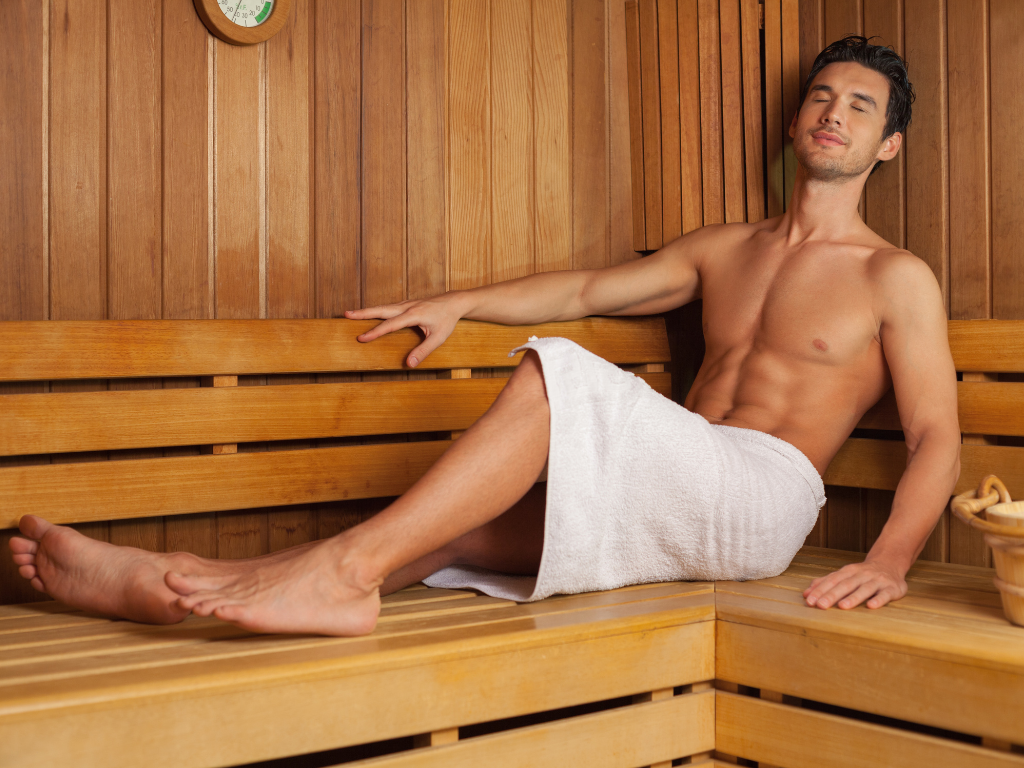
Hard training leaves a bill: stiff legs, aching shoulders, and the deep soreness that peaks a day or two later. Using an infrared sauna for muscle recovery has moved from athlete circles into everyday gym routines, helped by Singapore’s physical activity rate returning to a pre-COVID 84.7 percent in 2024. This blog walks you through what far-infrared heat does for sore muscles, drawing on the Life Energy Sauna therapy at our Ubi Road centre.
Yes. An infrared sauna for muscle recovery uses far-infrared heat to raise tissue temperature, widen blood vessels, and speed the delivery of oxygen and nutrients to worked muscles, which eases soreness and shortens the stiff phase after training. The effect is measurable, not just pleasant.
The clearest evidence comes from controlled trials. A 2022 study in Biology of Sport tested 16 male basketball players in a randomized crossover and found that a single 20 minute infrared sauna session at 43 degrees Celsius reduced muscle soreness immediately and again 14 hours later, while passive rest did not. An earlier SpringerPlus trial by Mero and colleagues found far-infrared bathing helped countermovement jump performance recover faster after endurance training, with less cardiovascular strain than a traditional sauna. We treat the sauna as a recovery tool with real backing, not a spa indulgence.
Far-infrared heat works mainly through blood flow. At a wavelength of 4 to 14 micrometers, the energy is absorbed by water and protein in tissue, warming muscle a few centimetres deep and triggering vasodilation. More blood means faster clearance of metabolic waste and faster delivery of the oxygen and amino acids that repair damaged fibres.
There is a second mechanism that gets overlooked. A 2025 review in Frontiers in Cardiovascular Medicine describes the body’s response to sauna heat as resembling “moderate to vigorous aerobic exercise”, and the cooldown afterwards prompts a parasympathetic shift that moves you out of post-workout fight-or-flight. That autonomic recovery is part of why people sleep better the night after a session. The same circulation that drives recovery is why we link heat with movement and circulation in any training plan.
No, and the lactic acid story is the most persistent myth in recovery marketing. Lactate clears from the bloodstream on its own within roughly 30 to 60 minutes of finishing exercise, with or without a sauna. It is also not what makes you sore two days later.
Delayed onset muscle soreness comes from microscopic damage to muscle fibres and the inflammatory response that follows, not from trapped lactic acid. We are blunt about this because the lactate clearance debate leads people to expect the wrong thing. A sauna does not flush acid out of tired muscles. It speeds recovery by improving blood flow, lowering perceived soreness, and shifting the nervous system toward repair. Selling it as a lactic acid flush is the kind of overreach that erodes trust, and it is exactly what we avoid.
It helps. Delayed onset muscle soreness peaks 24 to 72 hours after unaccustomed or heavy eccentric training, and far-infrared heat reduces both the intensity and the duration of that soreness. The 2022 Biology of Sport trial recorded lower soreness ratings 14 hours after a single session, which lands squarely in the window when DOMS is building.
The mechanism fits the timing. Increased circulation through sore tissue clears inflammatory by-products and brings repair material to the damaged fibres, while the heat itself eases the protective muscle guarding that makes a sore body feel stiff. Using an infrared sauna for sore muscles works best as a scheduled part of recovery rather than a one-off after a brutal session. This is why an infrared sauna for DOMS pays off most when it is programmed into a training week, not saved for the days you can barely walk. Consistency is what turns a single comfortable session into a measurable drop in your typical soreness curve.
Use the sauna after your session, once your heart rate has settled, not as a warm-up. A sauna after workout heat exposure layered on top of an already elevated core temperature offers no extra benefit and raises the dehydration risk. Give yourself 10 to 20 minutes to cool down from the training itself first.
Timing around the goal matters. For pure recovery and reduced soreness, a session within a few hours of training works well. For acute injury with swelling, cold comes first in the first 48 hours, and heat has its place afterwards. We set this distinction clearly, because reaching for heat on a fresh sprain is a common mistake. Hydration is the other non-negotiable, since the cardiovascular demand resembles moderate exercise and you will sweat.
For easing soreness and improving how recovered you feel, infrared sauna has the edge. For blunting acute inflammation right after a single hard bout, cold has its uses. The honest answer is that they do different jobs, and the choice depends on what you are training for.
Cold water immersion suppresses inflammation, which is useful before a competition but counterproductive when you want muscles to adapt and grow, since some inflammation drives that adaptation. Far-infrared heat does the opposite: it promotes blood flow and supports the repair process rather than shutting it down. For most people training for strength, endurance, or general fitness, the heat-based route in our energy therapy options is the more sustainable recovery habit. Athletes peaking for an event are the clearest case where targeted cold still wins.
A Life Energy Sauna recovery session runs 12 to 18 minutes of in-chamber exposure, followed by a 20 to 30 minute rest phase where the parasympathetic shift consolidates the benefit. That is shorter than the 20 minute protocols used in some studies, because the compact chamber and resonant 4 to 14 micrometer wavelength heat tissue efficiently.
Frequency tracks your training load. Two or three sessions a week suits most people training hard, often placed on the evening of a heavy session or the day after. Daily use is possible for high-volume athletes, but more is not automatically better, and hydration has to keep pace. Mr Tay, who founded the centre in 2003 after 19 years as a civil engineer, sets recovery cadence after assessment rather than selling a fixed block, because a marathon build and a strength block need different rhythms. For the wider picture of what regular sessions deliver, recovery is one benefit among several.
The Life Energy Sauna was engineered for efficient, low-strain heat, which is exactly what recovery needs. It runs on PTC ceramic semiconductor heaters rated at 1500W, delivering a 4 to 14 micrometer wavelength tuned to the resonance frequencies of water and protein in tissue. The compact chamber, 1 metre by 1 metre at 1.15 metres tall, concentrates that energy so a short session does real work.
Lower cardiovascular strain is the recovery advantage. The Mero trial found far-infrared produced less cardiac load than a traditional Finnish sauna, which matters when you are already taxed from training and do not want to add cardiac stress on a recovery day. A US patent granted in July 2024 (US 12,052,812 B2) covers controlled release of reactive oxygen and nitrogen species, a Cold Atmospheric Plasma feature linked to tissue repair signalling. The session delivers resonant warmth and a parasympathetic cooldown together, not heat alone.
Singapore’s heat and humidity change your recovery maths. You arrive at a session already sweating and often mildly dehydrated, so fluid replacement carries more weight than it would in a temperate climate. Training outdoors in tropical conditions also raises your baseline core temperature, which means the cooldown and rehydration after a session matter as much as the heat.
The wider health picture supports building recovery in. The Ministry of Health found obesity rising to 12.7 percent of residents in 2023 to 2024, even as physical activity climbed back to pre-COVID levels. More people training means more people needing structured recovery, and a short far-infrared session is a low-strain way to support it. Quality sleep and recovery close the loop on a hard training week.
Far-infrared heat earns its place in recovery through blood flow and autonomic calm, not by flushing lactic acid that already clears on its own. Controlled trials show reduced soreness and faster performance recovery, the effect builds with consistency, and timing it after training rather than before is what makes it work. For muscle adaptation, heat usually beats cold.
If training has left you stiff and slow to bounce back, book a recovery session with Mr Tay and set a cadence built around your training load.
Daily use is safe for most healthy, well-hydrated adults, though two or three sessions a week suits most training loads. Anyone with a cardiac condition, who is pregnant, or who trains in a dehydrated state should check with a doctor first. Mr Tay sets recovery frequency after assessment at GI Life Sciences.
After. A Life Energy Sauna session is a recovery tool, not a warm-up, and stacking heat on an already elevated core temperature before training raises dehydration risk without benefit. Wait until your heart rate settles, roughly 10 to 20 minutes post-session, then take 12 to 18 minutes of far-infrared heat.
Both. The 2022 Biology of Sport trial measured genuinely lower muscle soreness 14 hours after a single infrared session, driven by increased blood flow to damaged fibres. The relaxation is real too, since the parasympathetic shift during the rest phase is part of why recovery and sleep improve.
Within a few hours of finishing works well for soreness and stiffness. For an acute injury with swelling, use cold in the first 48 hours and save far-infrared heat for afterwards. The team at GI Life Sciences will match timing to whether you are recovering from training load or a specific injury.