
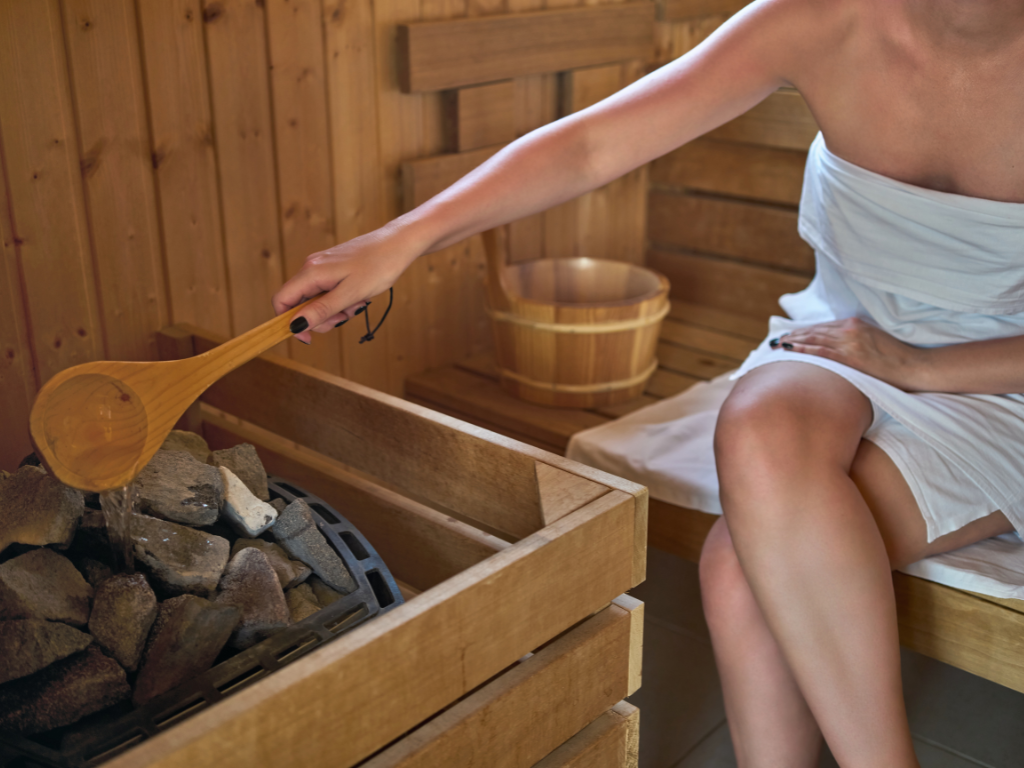
Interest in infrared sauna benefits in Singapore has risen alongside a real health pressure. The Ministry of Health’s 2024 population survey found obesity climbed to 12.7 percent of residents, with about one in three living with hyperlipidaemia or hypertension. Far-infrared heat offers a passive way to move blood and settle the nervous system. This blog walks you through what that heat does inside the body, drawing on the Life Energy Sauna sessions we run at our Ubi Road centre.
A far-infrared sauna warms your body directly with infrared light instead of heating the air around you. A traditional Finnish sauna heats the air to roughly 80 to 90 degrees Celsius, then your skin absorbs that warmth. Far-infrared cabins use radiant heaters that run cooler, often near 60 degrees Celsius, while still raising your core temperature. The Mayo Clinic puts the distinction plainly: an infrared sauna “heats your body directly without warming the air around you.”
The practical effect is comfort. Most people tolerate a far-infrared session far more easily than a steam room, which matters for anyone who finds high-heat saunas overwhelming. Lower air temperature, deeper tissue warmth, and a more breathable environment are the three engineering reasons far-infrared has overtaken steam in clinical wellness settings.
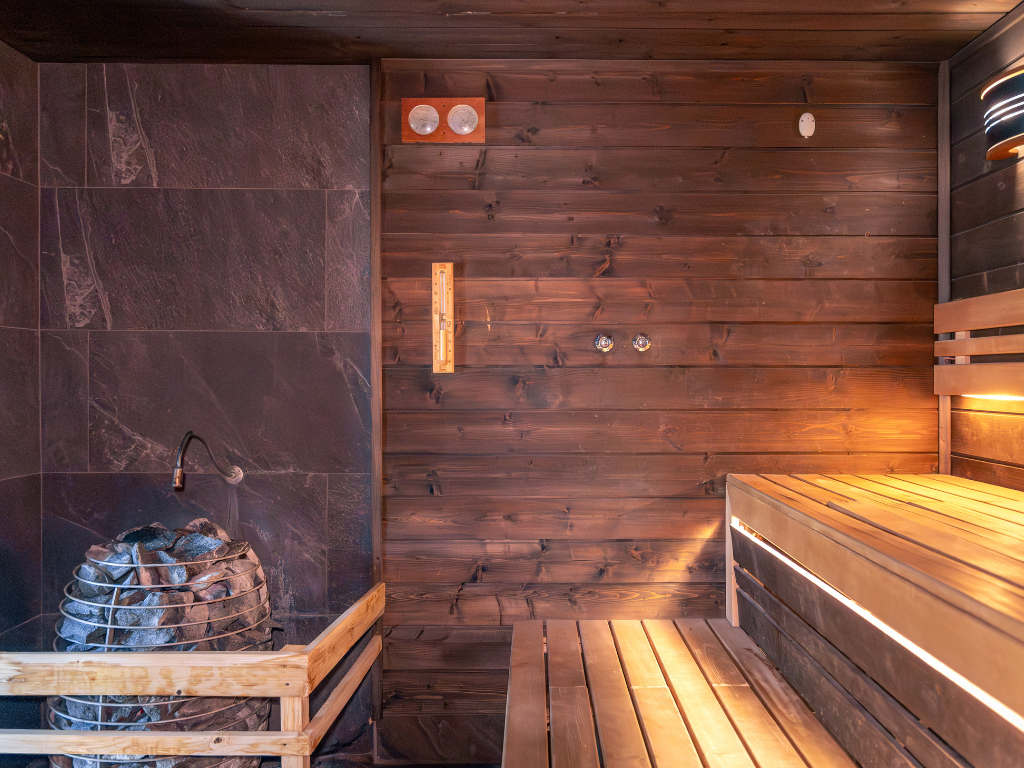
Far-infrared waves penetrate a few centimetres into soft tissue rather than stopping at the skin surface. At a wavelength of 4 to 14 micrometers, that radiant energy is absorbed efficiently by water and protein, which make up most of the body. As tissue warms, blood vessels widen and circulation increases. This vasodilation is the main mechanism behind almost every benefit people report.
A far-infrared sauna review in Canadian Family Physician documented that users sweat vigorously at a lower temperature than a traditional sauna, and that the cardiovascular load resembles moderate exercise. Your heart rate lifts, skin blood flow rises, and the body works to regulate its own temperature. None of this depends on extreme heat. It depends on the wavelength reaching tissue and the body responding to a controlled thermal signal.
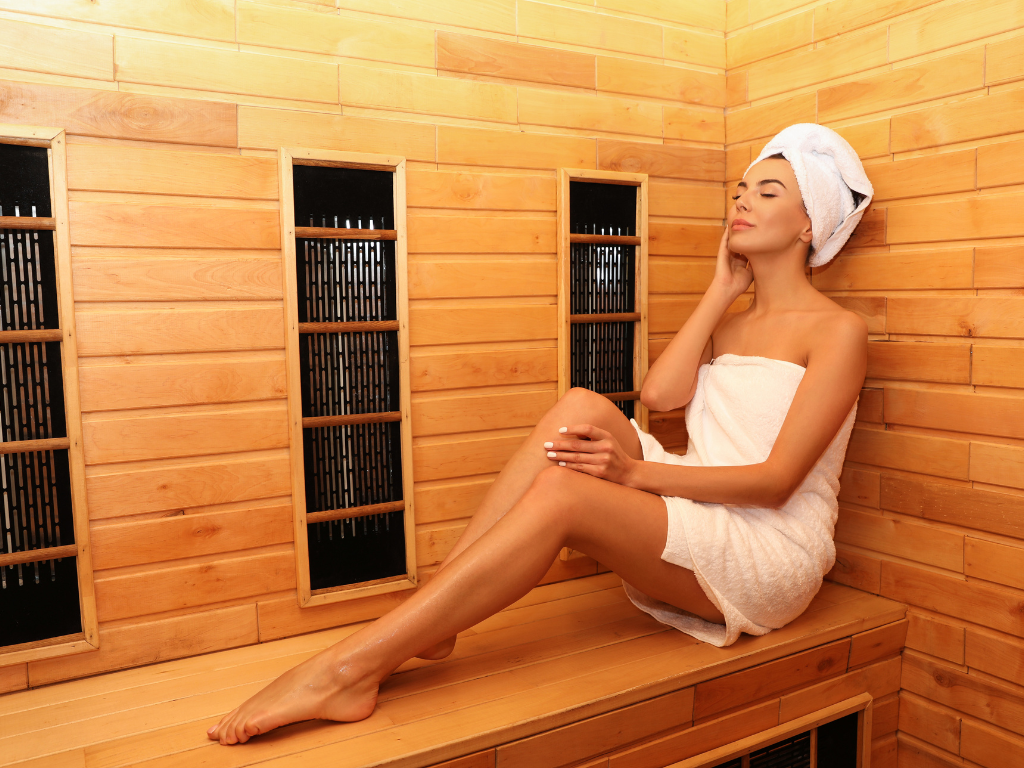
The most reliable infrared sauna benefits in Singapore cluster around circulation, relaxation, and recovery. Regular heat exposure widens blood vessels, supports endothelial function over time, and triggers a parasympathetic shift during the cooldown that lowers heart rate and eases muscle tension. People who sit in air-conditioned offices all day tend to feel this contrast sharply.
We take a clear stance on the weaker claims. A far-infrared sauna does not “detox heavy metals,” and the weight you lose during a session is water you replace by drinking. Sweating is thermoregulation, not purification. The honest benefit picture is circulatory and neurological, not a cleanse. Holding that line is what separates clinical wellness from marketing, and it shapes how we talk about every modality, including our non-invasive energy therapy options.
Yes, for the right cases. Heat-driven vasodilation increases oxygen and nutrient delivery to muscles and joints while clearing metabolic waste, which is why athletes use sauna sessions after training. A 2025 review in Rheumatology International found that structured sauna therapy reduced pain and stiffness and improved mobility in patients with rheumatoid arthritis, ankylosing spondylitis, and osteoarthritis.
There is also signalling beyond simple warmth. Far-infrared exposure has been linked to lower C-reactive protein, an inflammatory marker; readings above 3 mg/L point to meaningful systemic inflammation. For recurring muscle inflammation, the recovery pattern is individual, which is why we assess each person rather than prescribe a fixed sauna count. Pairing heat with everyday movement and circulation usually does more than either alone.
The cardiovascular case is the strongest in the literature. A 2025 review in Frontiers in Cardiovascular Medicine described the body’s response to sauna heat as resembling “moderate to vigorous aerobic exercise”, with measurable effects on vasodilation, arterial stiffness, and blood pressure. For people who cannot exercise because of joint pain or other limits, passive heat offers a low-strain way to load the cardiovascular system.
This matters in Singapore specifically. With one in three residents carrying hyperlipidaemia or hypertension, a gentle, repeatable cardiovascular stimulus has real value. We frame the sauna as a complement to medical care, never a replacement, and we say so to every client who books with us.
Singapore’s damp-heat climate and air-conditioned work culture pull the body in opposite directions. Humid outdoor air, then hours in cold offices, suppress the natural vasodilation that keeps circulation responsive. Many people here run sedentary days with very little real thermal variation.
A short far-infrared session restores that signal deliberately. The Ministry of Health’s National Population Health Survey reported obesity rising from 10.5 percent in 2019 to 2020 up to 12.7 percent in 2023 to 2024, with sedentary patterns a known contributor. Controlled radiant heat gives an air-conditioned body a structured circulatory workout it rarely gets otherwise. The damp-heat pattern common in Singapore also responds well to warmth that moves stagnation, which is where this modality meets our broader wellness work.
The Life Energy Sauna was engineered, not assembled from off-the-shelf parts. It runs on PTC ceramic semiconductor heaters rated at 1500W, delivering a 4 to 14 micrometer wavelength tuned to the resonance frequencies of water and protein in human tissue. The chamber is compact at 1 metre by 1 metre and 1.15 metres tall, which concentrates radiant energy more efficiently than a large wooden cabin.
The deeper differentiator is its patented technology. A US patent granted in July 2024 (US 12,052,812 B2) covers a capacitor capable of releasing controlled levels of reactive oxygen species and reactive nitrogen species when powered, a category known as Cold Atmospheric Plasma that supports wound healing and tissue repair signalling. The heater lineage traces back to a 1992 PTC ceramic patent (5,125,070). A single session therefore delivers three coordinated inputs: resonant far-infrared warmth, controlled ROS and RNS release, and a parasympathetic shift during rest. A heat-only cabin delivers one. The Life Energy Lamp application extends the same energy-therapy approach for targeted areas.
A Life Energy Sauna session runs 12 to 18 minutes of in-chamber exposure, followed by a 20 to 30 minute rest phase. That cooldown is not optional. The parasympathetic shift, when heart rate settles and the body moves into recovery mode, happens during rest, not during the heat itself.
The compact chamber, resonant wavelength, and 1500W output let us keep exposure short while still raising core temperature. Frequency depends on the person. Someone managing chronic stiffness may benefit from two or three sessions a week, while someone using it for general recovery may want fewer. We set cadence after assessment rather than selling a fixed block of sessions, because the right rhythm is the one your body actually adapts to. Hydration before and after is non-negotiable.
Far-infrared sauna therapy is well tolerated by most healthy adults. The lower air temperature makes it gentler than a steam room, and sessions are monitored for comfort throughout. Risk sits mainly with specific conditions rather than the heat itself.
Anyone who is pregnant, has an active cardiac condition, takes medication that affects heat tolerance, or has had a recent cardiovascular event should speak with their doctor before booking. Dehydration is the most common avoidable problem, so we ask clients to arrive hydrated. If you feel lightheaded during a session, that is the signal to stop, not to push through. Honest contraindication advice is part of how we work, and it carries into our personalised health coaching as much as our energy therapy.
A sauna session rarely works in isolation. At our centre, far-infrared sits inside a wider plan that may include functional nutrition, TCM care, and the ESG metabolic energy assessment, a non-invasive measurement Tay Swee How introduced in 2008 to map which body systems are running outside their functional range. Mr Tay personally handles consultations, applying a systems-thinking habit carried over from his 19 years as a civil engineer before he founded the centre in 2003. The plan emerges from that assessment, not from a pre-set package.
Far-infrared heat earns its place through one reliable mechanism: it warms tissue at a wavelength the body absorbs, widens blood vessels, and prompts a recovery response that an air-conditioned, sedentary day rarely triggers on its own. The cardiovascular and circulatory evidence is solid; the detox and weight-loss claims are not. Knowing which is which is the difference between a wellness purchase and a wellness result.
If you want to feel what a properly engineered session does, arrange a consultation with Mr Tay and book your first Life Energy Sauna appointment at our Ubi Road centre.
No. Sweating in a far-infrared sauna is thermoregulation, and the weight lost is water you replace by drinking. The real infrared sauna benefits in Singapore are circulatory and recovery related, driven by vasodilation at GI Life Sciences, not by flushing toxins or burning fat.
Most people feel relaxation and eased muscle tension after a single Life Energy Sauna session, thanks to the parasympathetic shift during the 20 to 30 minute rest phase. Circulatory and cardiovascular adaptations build over weeks of consistent use, similar to how exercise effects accumulate.
Daily use is possible for healthy adults, but frequency should match your goal. For general recovery, two or three sessions a week is common. Mr Tay sets cadence after assessment rather than prescribing a fixed count, since the right rhythm depends on your condition and hydration.
Speak with your doctor first. Pregnancy, active cardiac conditions, and recent cardiovascular events all call for medical clearance before any far-infrared session. The TCMPB-registered team at GI Life Sciences screens for these factors and will decline a session when caution is warranted.